
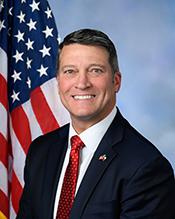
Ronny Jackson fell 62 places in NDL's House standings on Tuesday, from 97th to 159th, the biggest drop of the day. He didn't cast a vote to get there. No new roll calls came in at all: the last ones in NDL's data are from Nov. 19 in the House and Nov. 20 in the Senate, and not one of Tuesday's 289 score changes came from a vote. (Four discharge petitions that reached 218 signatures earlier in the Congress were added the same day; they moved no score.)
What changed was the money. The Federal Election Commission's newest file of itemized gifts, dated Nov. 22, let NDL trace $42.9 million more to members' 2025–26 campaigns than the copy it had been using. Members' total receipts, which come from a separate FEC summary, didn't change. So every newly traced dollar from an industry raised that industry's share of a member's money.
Most of the changes were small: 228 of the 289 were under 10 points. But for 16 members the new money moved a funder across a line, one way or the other, and those 16 account for about half of all the points that moved.
The line
NDL measures how firmly each of the industries it calls pirates holds a member, and calls it grip. It runs from 0 to 1: from nothing at $50,000 to full at $1 million, or from 1% to 5% of everything the member raised, whichever is higher. Every penalty for voting a pirate's way is multiplied by it.
At about half grip, 3% of everything raised or $250,000, a pirate becomes a captor. That's the line. A vote the way a captor wanted, on a question no clear poll covers, is a sus vote: 10 to 20 points, times the grip, and more for members who take a lot of pirate money overall. Below the line, the same vote costs nothing. (A sell-out, where the member's own voters clearly wanted the other side, costs points below the line too, scaled by grip.)
So when a pirate crosses the line, a member's past votes its way on unpolled questions start counting against them, all at once. When it drops back under, they stop.
Jackson: $14,940 over
NDL counts a pirate's money as what its PACs gave plus what people in the industry gave in gifts of $1,000 or more. Wall Street's money to Jackson since 2023 stood at $238,169 in the old files. The new ones put it at $264,940, over the line by $14,940. Wall Street joined big agriculture and defense contractors as his captors, and 15 of his votes became sus votes, at 10.6 points each: 159 points.
Eight of the 15 came on bills that passed with at least 373 votes, among them the Financial Exploitation Prevention Act (414–2) and the Keeping Deposits Local Act (405–0). NDL counts those too. The rule doesn't ask how the rest of the House voted: if a captor wanted it and no clear poll says what the public wanted, it's a sus vote. The other seven split the parties, among them the GENIUS Act on stablecoins and S.J.Res. 18, which threw out the Consumer Financial Protection Bureau's rule on overdraft fees at the largest banks.
Jackson still sides with his district far more often than not: 44 scored votes with his voters and 11 against, worth 272.5 points. His best came on two clean-government votes, which count triple: releasing the Epstein files, and the Stop Insider Trading Act, which as passed also requires photo ID to vote, 30 points each. His funder votes now cost him 415.
Same vote, different price
| Member | Why that price | A yes cost |
|---|---|---|
| R Frank Lucas, Okla. | Wall Street at full grip; 60% of his money is pirate money, the most in the House | −66.8 |
| R Ryan Mackenzie, Pa. | Wall Street at full grip; 23.5% pirate money | −35.8 |
| D Jared Huffman, Calif. | Wall Street crossed 3% on Tuesday | −11.0 |
| R Ronny Jackson, Texas | Wall Street crossed $250,000 on Tuesday | −10.6 |
| 96 other yes votes | Wall Street isn't their captor | 0 |
NDL doesn't call the bill bad. It can't say the public was against it, which is why a sus vote costs less than a sell-out. What it records is that a pirate holding the member wanted the vote, and the member voted its way. The price comes from the money: the pirate's grip, where the member ranks in the House for its share of their money, and how much pirate money they take overall.
Huffman: $2,571 over
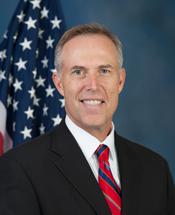
The same eight lopsided bills moved a Democrat. Jared Huffman of California started the day 26th. Wall Street's money to him went from $79,222 to $82,722, which took it from 2.97% of the $2.67 million he has raised since 2023 to 3.10%. That's $2,571 over the line.
All eight of his new sus votes are the bills that passed with at least 373 votes. They cost him 88 points, and with a clean-money bonus three points smaller, he fell to 50th. He still has no sell-out votes, and he has sided with his voters 44 times and against them 17.
A game of inches
Most of the crossings were close. The closest was Jon Husted's. The Ohio senator's Big Food money went from $227,277 to $250,228, over the line by $228. His Big Tech money crossed $250,000 too, and between them the two added three sus votes.
House Speaker Mike Johnson's Big Telecom money crossed $250,000 by $719 and cost him nothing new. His score rose 60 points anyway: the new files trace less pirate money to him overall, 17.5% of what he has raised, down from 18.1%, and that lowers the price of every funder vote he has cast.
Chris Smith of New Jersey crossed by $1,581. His Big Manufacturing money rose $3,000, to $53,000, or 3.09% of what he has raised, and 14 of his votes became sus votes, eight of them on energy and mining bills. He lost 250 points and fell from 242nd to 261st. Brett Guthrie of Kentucky, who chairs the Energy and Commerce Committee, crossed with big agriculture by $3,322 after a $5,000 change: four more sus votes, and with tighter grips elsewhere, a 228.5-point drop, from 363rd to 384th.
| Member | Pirate | Before | Now | Sus votes | Points | Rank |
|---|---|---|---|---|---|---|
| R Jon Husted, Ohio (S) | Big Food; Big Tech | $227,277; $234,654 | $250,228; $279,746 | +3 | −377.4 | 81 → 91 |
| D Henry Cuellar, Texas | Israel Lobby | 1.82% | 3.91% | 0 | −258.0 | 259 → 282 |
| R Chris Smith, N.J. | Big Manufacturing | 2.92% | 3.09% | +14 | −250.0 | 242 → 261 |
| R Brett Guthrie, Ky. | Big Agriculture | $248,322 | $253,322 | +4 | −228.5 | 363 → 384 |
| R Ronny Jackson, Texas | Wall Street | $238,169 | $264,940 | +15 | −171.3 | 97 → 159 |
| R Sheri Biggs, S.C. | Real Estate Moguls | 2.81% | 3.16% | +6 | −170.4 | 188 → 229 |
| R Mariannette Miller-Meeks, Iowa | Big Oil | $248,398 | $261,714 | +6 | −150.0 | 348 → 362 |
| R Lisa McClain, Mich. | Big Agriculture | $240,624 | $255,054 | +5 | −126.3 | 329 → 345 |
| R Pete Ricketts, Neb. (S) | Big Tech | $226,332 | $254,458 | +2 | −111.7 | 80 → 82 |
| D Jared Huffman, Calif. | Wall Street | 2.97% | 3.10% | +8 | −91.0 | 26 → 50 |
| D Nellie Pou, N.J. | Real Estate Moguls | 2.72% | 3.05% | +1 | −56.1 | 157 → 175 |
| R Tom Cotton, Ark. (S) | Big Tech | $236,396 | $252,636 | +1 | −14.0 | 88 → 88 |
| D Tim Kennedy, N.Y. | Israel Lobby | 2.89% | 3.14% | 0 | −9.1 | 136 → 136 |
| R Bill Hagerty, Tenn. (S) | Big Tech, dropped under | $252,686 | $245,626 | −2 | +32.6 | 53 → 52 |
| R Mike Johnson, La. | Big Telecom | $245,667 | $250,719 | 0 | +59.9 | 316 → 309 |
| R Ryan Mackenzie, Pa. | Big Manufacturing, dropped under | 3.05% | 2.99% | −16 | +206.4 | 292 → 280 |
The other way: Mackenzie, $741 under
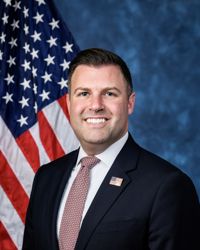
Ryan Mackenzie of Pennsylvania had the best day in Congress without casting a vote. The new files trace $4,403 less Big Manufacturing money to him than the old ones did, most of the drop in gifts that came through his joint fundraising committees. That leaves $220,620, or 2.99% of the $7.38 million he has raised. The line is $221,361.
Under it, 16 votes he cast the industry's way, on bills no clear poll covers, stopped counting. He gained 206 points and climbed from 292nd to 280th.
He's still 280th. He has 17 sell-out votes, one short of the House high of 18, and Wall Street, which holds him at full grip, has cost him 591 points on its own. His costliest single vote was for the One Big Beautiful Bill Act, which most of his voters opposed by NDL's estimate: 89.6 points for Wall Street, and 10 more for voting against his voters.
The biggest losses
The day's biggest loss, 377 points, was Husted's. Beyond big food and Big Tech, the new files show $297,638 more given to him through pro-Israel PACs that pass their donors' gifts on, taking the Israel Lobby group's total to $689,873. That tightened its grip on 22 of his votes, 16 of them against resolutions to end U.S. military action against Iran. NDL recorded the group's side on those as its own judgment, because no statement from the group was found. Husted's pirate money is now 25.2% of what he has raised, over the 25% line where NDL stamps a member captured.
Henry Cuellar of Texas lost 258 points without a single new sus vote. Money routed to him through pro-Israel PACs this cycle grew from $46,710 to $167,560 in the new files, more than doubling the Israel Lobby group's total to $226,710, or 3.91% of his money. That, and more pirate money overall (29.6% of what he has raised, up from 26.3%), raised the price of votes he had already cast. Two of them now cost 75.3 points each, votes where his voters wanted the other side by NDL's estimate: against H.Con.Res. 38, the March resolution to end U.S. hostilities against Iran (the group's side there is NDL's judgment), and against Thomas Massie's amendment to bar money in the State Department funding bill from going to Israel, which AIPAC and three other pro-Israel groups wanted defeated. Cuellar still has the second-most points from votes in the House, 575.
Five members crossed that 25% line on Tuesday: senators Richard Blumenthal (25.1%), Ashley Moody (26.2%), Susan Collins (26.8%) and Husted (25.2%), and Representative Andrew Clyde of Georgia (25.5%). The stamp costs no points by itself.
At the top, a ripple
The leaders moved by a point or two. In the Senate, Bernie Sanders' clean-money bonus slipped a point, so the half-point race is now a point and a half: Elizabeth Warren 703.6, Sanders 702.1. In the House, Pramila Jayapal's bonus slipped two, and she leads Adelita Grijalva 594 to 441.
The rules are locked for the season. The money isn't. Members file their post-election reports with the FEC by Dec. 3, and NDL rebuilds its money files a week after each filing deadline, so the next refresh is due Dec. 10. The votes are in the book. The money is still coming in.
How this was made
Written by NDL's editor from the Scoring v1 standings of Nov. 24, 2026, built that morning. The last votes in the data are from Nov. 19 (House) and Nov. 20 (Senate). Before-and-after money comes from NDL's money files built from the FEC data used on Nov. 23 and on Nov. 24; the captor-line figures were recomputed by script with the formula the score uses, and every number was checked against the database. The rules are locked for the season; ranks still move with new votes, polls and money. Senate stock trades are not loaded yet, so no senator has a trade penalty. AI helped draft the text.
Sources
- Money: FEC bulk data (individual contributions file dated Nov. 22, 2026; candidate and committee summaries), grouped by industry by NDL, including leadership PACs
- Votes: Voteview (UCLA), from the House and Senate clerks
- Funder positions: letters and statements on file for each vote, such as the ICBA and Consumer Bankers Association on S.J.Res. 18; owner judgment where marked
- Voters' views: national polls with party breakdowns, combined with each district's or state's 2024 presidential vote (The Downballot)
- Rules: NDL Scoring
Corrections: none yet. See an error? Tell us.